As a key green manufacturing technology, magnesium alloy semi-solid die casting breaks through the limitations of traditional liquid die casting through precise control of semi-solid rheological forming, providing a new solution for lightweighting. With the upsizing of equipment and breakthroughs in material technology. Expected lightweight revolution in new energy vehicles, consumer electronics and other fields, helping achieve global "dual carbon" goals.
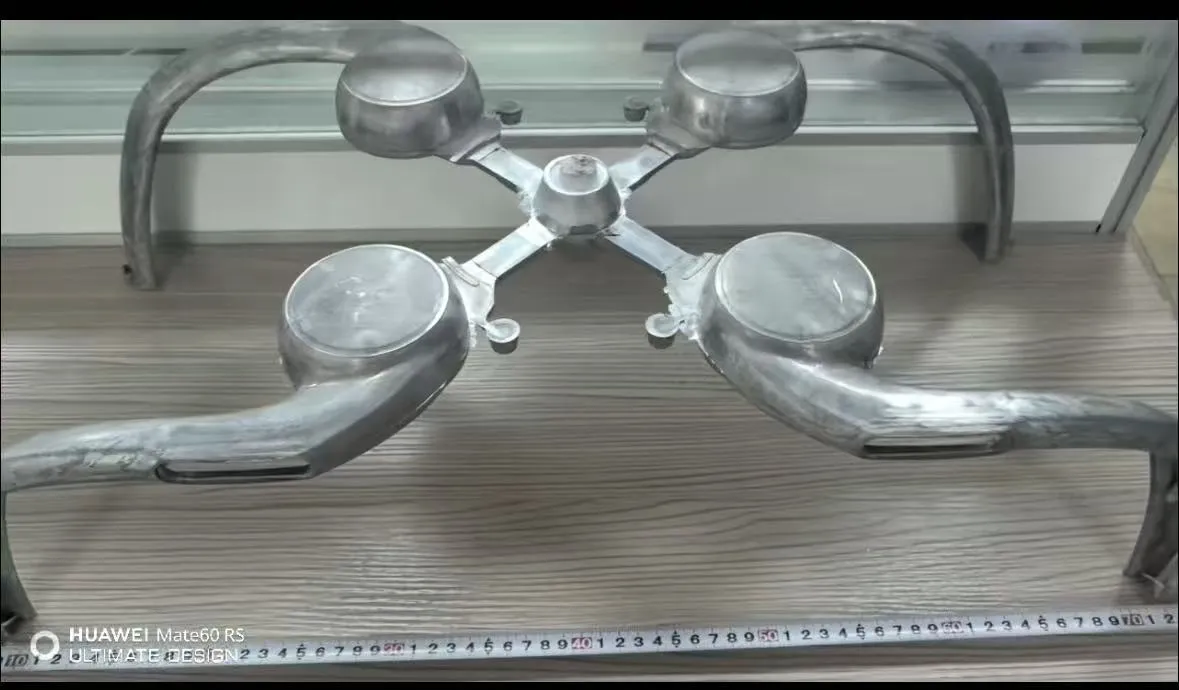
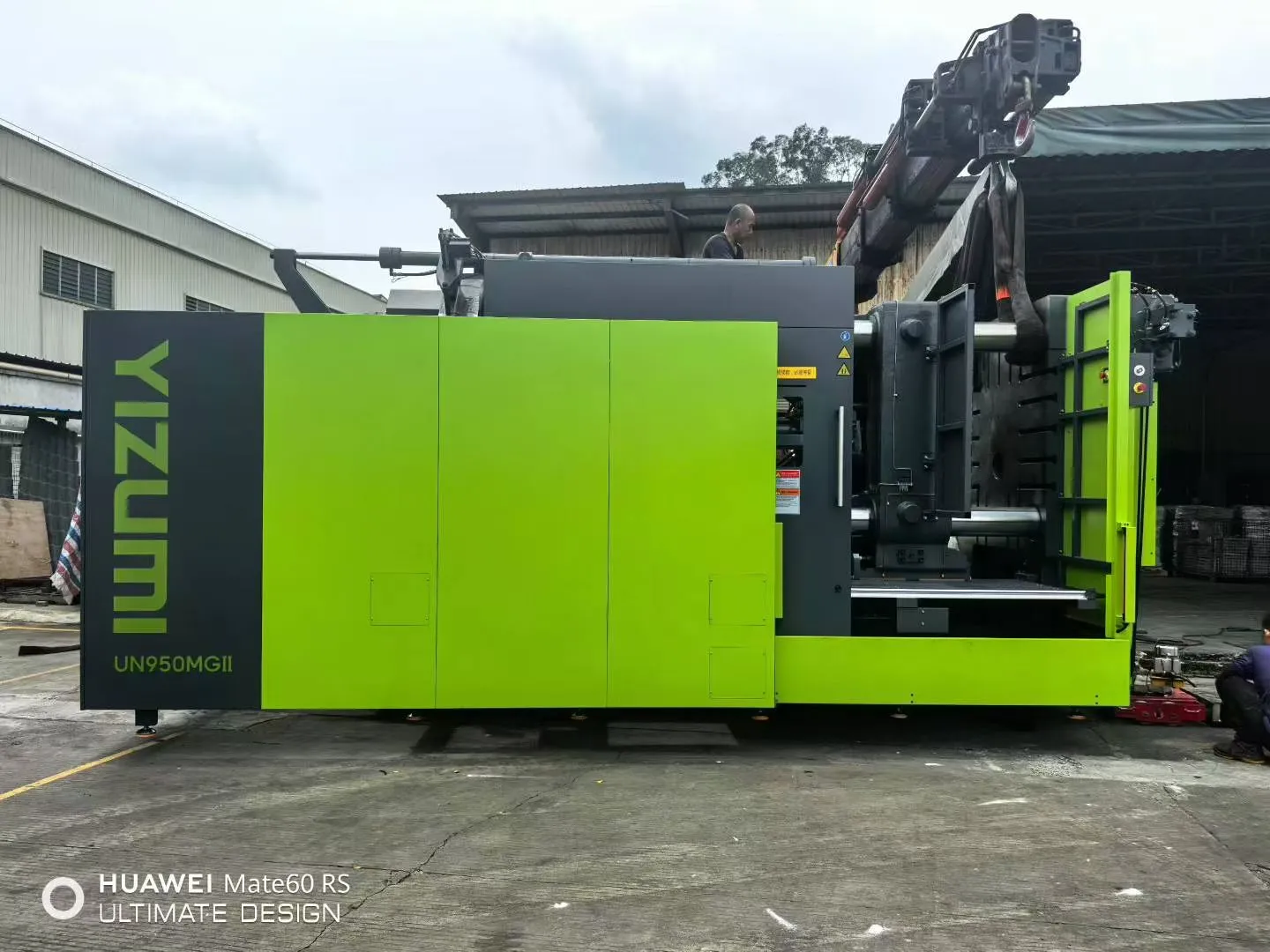
Shenzhen E-booming Industrial Co., Ltd combine with Maidea introduce 950T Magnesium Alloy Semi-Solid Die Casting machine brand YIZUMI on 15th July and produce the first sample of Magnesium Alloy Semi-Solid Die Casting part that is Robert Exoskeleton. They are approved by our customers.
I. Technical Principle
Magnesium alloy semi-solid die casting is an advanced forming technology. It heats magnesium alloy to the solid-liquid two-phase region (solid fraction 30%-70%) and utilizes its "shear thinning" characteristic for precision forming. Under shear force, the viscosity of semi-solid slurry decreases significantly, showing fluidity similar to "toothpaste" that can fill complex mold cavities. A dense casting is formed after cooling.
Core Processes:
Thixomolding: Pre-fabricated non-dendritic magnesium particles/chips are fed into the barrel. Through screw rotation and segmented heating (430-620℃), semi-solid slurry with "partially molten + spherical solid phase" is formed under shear action, then injected into the mold at high speed.
Rheocasting: Semi-solid slurry is directly prepared from liquid metal and immediately formed.
II. Detailed Process Flow
Raw Material Preparation: Magnesium alloy particles/chips are used (no melting furnace required).
Semi-Solid Slurry Preparation:
Particles enter the barrel with 5-7 sections of gradient heating from the hopper.
Screw rotation provides shear force to break dendrites into spherical structures.
Stable semi-solid slurry (solid fraction about 40-50%) is formed at the front end of the barrel.
Injection Molding:
Slurry is injected into the preheated mold at a speed of 3-5m/s and pressure of 50-100MPa.
The mold adopts "water cooling + air cooling" dual temperature control, with a forming cycle of about 45-60 seconds.
Cooling and Solidification: A cold slug is automatically formed at the front end of the nozzle for sealing, no protective gas needed.
III. Advantages Compared with Traditional Die Casting
1.Forming Temperature Reduced by about 100℃ than tranditional die casting, doubling mold life
2.Injection Speed Smoother filling, reducing turbulence and porosity
3.Porosity Decreased by over 70% than tranditinal die casting, improving casting density (>98%)
4.Mechanical Properties Significantly improved strength and toughness
5.Material Utilization Rate Increased by about 40% than tranditional die casting, reducing costs
6.Mold Life Increased by over than tranditional die casting 60%
7.Environmental Friendliness Green manufacturing, reducing carbon emissions
IV. Application Fields
1. Core Components of New Energy Vehicles
Electric Drive Housing: SAIC's first mass-produced semi-solid magnesium alloy electric drive housing achieves 30% weight reduction, qualification rate increased from 78% to 95%, and cost reduced by 18%.
Battery Pack Housing: BYD's full semi-solid electric drive housing has a material utilization rate ≥70% and has completed vehicle road testing.
Instrument Panel Bracket/CCB: Successfully trial-produced by Wuling Industry, solving the cracking problem of traditional processes.
2. Consumer Electronics and AR/VR
Laptop Casings: Lenovo ThinkBook X AI and others adopt "stainless magnesium" + semi-solid process, achieving high-gloss appearance and corrosion resistance.
AR Glass Frames: Applied by Eontec with semi-solid technology, perfectly presenting special curved design and improving strength and lightweight performance.
3. Other High-End Fields
Aerospace Components: Lightweight structural parts improve fuel efficiency.
Robot Joints: High-toughness magnesium alloy + semi-solid forming meets impact resistance requirements.
5G Base Station Heat Dissipation Components: Utilizing magnesium alloy's excellent thermal conductivity (150W/mK) to enhance heat dissipation efficiency.

